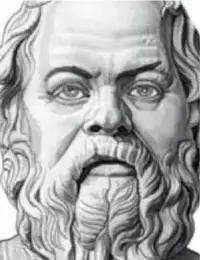
Socrates

SOCRATES

470-399 BCE

I know that I know nothing — wisdom begins with recognizing your own ignorance.

Difficulty:
Born: -470 in Athens, Greece
Died: -399 (aged 71)
Nationality: Greek (Athenian)

Personal Character

Famously ugly: snub-nosed, bulging eyes, pot-bellied, walking barefoot in all seasons. Yet possessed extraordinary charisma that drew the brightest young Athenians into his orbit. Married to Xanthippe, who had a reputation for shrewishness (possibly undeserved); they had three sons. Served as a hoplite soldier with notable courage at Potidaea, Delium, and Amphipolis. Could drink all night without getting drunk. Stood motionless for hours lost in thought. Combined physical toughness with intellectual relentlessness. Ironic, playful, maddening, and magnetic.

Death Circumstances

Executed by drinking hemlock in Athens after being convicted of impiety and corrupting the youth

Last Words

Crito, we owe a cock to Asclepius. Pay it and do not neglect it.

Socrates was born in 470 BCE, the son of Sophroniscus, a stonemason, and Phaenarete, a midwife. He compared his own work to his mother’s: she delivered babies; he delivered ideas from minds pregnant with thoughts they didn’t know they had.

He spent his entire life in Athens, leaving only for military campaigns. As a young man, he studied natural philosophy — Plato says he was excited by Anaxagoras — but became disillusioned. The cosmologists couldn’t tell him how to live. He turned inward, to the soul, to virtue, to the question that would define him: what is the good life?

His method was conversation. He would approach prominent Athenians — politicians, generals, poets, craftsmen — and ask them to define concepts they claimed to understand: justice, courage, piety, beauty. Through relentless questioning, he would expose their confusion. They thought they knew; they didn’t. This made him unpopular with the powerful and fascinating to the young.

He wrote nothing. We know him through others: Plato (who idealized him), Xenophon (who made him boring), Aristophanes (who mocked him), and Aristotle (who analyzed him). The “real” Socrates is irrecoverable, buried under interpretations.

He fought bravely in the Peloponnesian War, saving Alcibiades’ life at Potidaea. He defied the Thirty Tyrants when they ordered him to arrest an innocent man. He defied the democratic assembly when they wanted to try generals illegally. He was no coward, no crowd-pleaser, no respecter of illegitimate authority.

In 399 BCE, Athens turned on him. The charges: impiety (introducing new gods, not believing in the city’s gods) and corrupting the youth. The trial was a sham; the real crime was embarrassing powerful people and associating with men who later became tyrants. He was convicted by a narrow margin.

Offered the chance to propose exile, he suggested free meals for life — the reward given to Olympic victors. The jury was not amused. He was sentenced to death. Friends offered escape; he refused. The laws of Athens had shaped him; he would not betray them. He spent his final hours discussing the immortality of the soul, then drank the hemlock calmly. He was seventy years old.

The Oracle at Delphi declared that no one was wiser than Socrates. Baffled — he was certain he knew nothing — Socrates set out to find someone wiser. He questioned politicians, poets, craftsmen. Each thought they knew things they didn't. Finally he understood: he was wisest only because he knew his own ignorance. Others thought they knew; he knew he didn't. This tiny margin of self-awareness was the whole of human wisdom.
Socrates didn't claim to know nothing — he claimed to lack the wisdom he sought about the most important things (virtue, the good life). He had plenty of beliefs and argued for them vigorously. The "Socratic method" wasn't neutral questioning; it was guided, leading interlocutors toward conclusions Socrates wanted. He wasn't a democrat — he had deep reservations about rule by the ignorant many. And his "daimonion" (divine sign) wasn't a full voice or god; it was a warning feeling that stopped him from doing certain things.
Epochs
Classical Foundations (200 BCE-400 CE)
Schools
Socratic Method
Philosophical Themes
DIALOGUE ELENCHUS ETHICS EXAMINED LIFE IRONY KNOWLEDGE MAIEUTICS VIRTUE
Broke philosophy away from cosmology toward ethics. The Presocratics asked "what is everything made of?" Socrates asked "how should I live?" This turn — from physics to ethics, from nature to the soul — cracked open a new container. But his method was so radical that he fit nowhere: too questioning for tradition, too moral for the sophists, too unsystematic for later philosophers.

Quotes

  • "The unexamined life is not worth living."

    — Apology — his defense speech at trial, explaining why he cannot stop philosophizing

  • "I know that I know nothing."

    — Paraphrase of Apology 21d — the Socratic paradox of wisdom through ignorance

  • "No one does evil willingly."

    — Core Socratic doctrine — if we truly knew the good, we would do it; evil is ignorance

MASTERWORK

None — Socrates wrote nothing

His conviction that philosophy is dialogue, not doctrine, made writing impossible. Living conversation could respond, adapt, question the questioner. Written words just "say the same thing forever." We have him only through others' eyes: Plato dramatic dialogues, Xenophon's memoirs, Aristophanes' satire, Aristotle analysis.
WORK

Plato Apology

Plato version of Socrates' defense speech at trial — as close as we get to his authentic voice
WORK

Plato Crito

Dialogue on why Socrates refuses to escape prison — duty to law
WORK

Plato Phaedo

Socrates' final hours, discussing immortality before drinking hemlock
WORK

Xenophon's Memorabilia

Alternative portrait — more practical, less philosophical than Plato Socrates
Read Plato Apology — it's short, dramatic, moving, and captures why Socrates matters. Then Euthyphro for the method in action.
Socrates heard a "divine sign" (daimonion) — a voice or feeling that warned him away from certain actions. He took it seriously, as did his accusers. The rationalist hero had a mystical streak.
RESPONDS TO
  • Anaxagoras, Parmenides, the Sophists (Protagoras, Gorgias), Delphic Oracle
INFLUENCES
  • Plato, Xenophon, Antisthenes (Cynics), Aristippus (Cyrenaics), all subsequent ethics
ARGUED AGAINST
  • Sophists' relativism, Athenian democracy (implicitly), unreflective tradition

Visual Simile

Imagine Athens as a large, well-fed, sleepy horse. It's comfortable, self-satisfied, dozing through questions that should keep it awake. Now imagine a gadfly — small, annoying, persistent — stinging the horse over and over, forcing it to move, to think, to stay alert. That's Socrates: the sting that prevents comfortable sleep. Athens eventually swatted the fly. But the sting left a wound that never healed.

Socrates asked one question: how should I live? To answer it, he needed to know what virtue is — courage, justice, piety, wisdom. So he asked people who claimed to know. And always found they didn’t.

His method was elenchus — cross-examination. Take a confident definition (“courage is standing your ground in battle”). Find cases it doesn’t cover (isn’t strategic retreat sometimes courageous?). Watch the definition collapse. Try another. Watch it collapse too. End in aporia — confusion, puzzlement, the recognition of ignorance.

This sounds destructive, and it was. Socrates was a gadfly, stinging Athens into wakefulness. But the destruction served a purpose: you cannot seek what you think you already have. Recognizing ignorance opens you to inquiry. The examined life begins with the admission that you don’t know how to live.

Behind the method lay a radical doctrine: virtue is knowledge. If you truly knew what courage was, you would be courageous. No one does evil willingly; evil is ignorance. The coward doesn’t know what is truly fearful (disgrace, not death). The unjust person doesn’t know what is truly harmful (injustice harms the doer). If we could teach virtue — if we could make people see clearly — they would be good.

This is wildly optimistic about human nature. Plato and Aristotle would qualify it heavily. But it preserves something essential: the idea that philosophy can change how you live, that thinking clearly about the good is connected to achieving it.

Socrates also claimed that “no harm can come to a good person.” External misfortune — poverty, illness, death — cannot damage what matters most, the soul’s virtue. This Stoic-sounding doctrine means that Socrates went to his death believing he was unharmed by his executioners. They could kill his body; they couldn’t touch him.

Philosophy before Socrates asked about nature. After him, it asked about the soul, virtue, the good life. The "Socratic turn" made ethics central. Every school that followed — Plato Academy, Aristotle Lyceum, Stoics, Epicureans, Cynics, Skeptics — began by responding to Socrates. The method of questioning definitions shaped all subsequent logic. The figure of the philosopher as martyr, dying for truth, became a template: Jesus, Thomas More, countless others. Western civilization's commitment to the examined life, to questioning authority, to preferring truth to comfort — this is Socrates' legacy.
The Socratic method remains the gold standard for education that teaches thinking rather than facts. Legal cross-examination descends from elenchus. His insistence that expertise in one domain doesn't transfer to another (generals know war, not politics) challenges our culture of celebrity opinion. His willingness to die rather than stop questioning is a rebuke to intellectual cowardice. And his warning — that democracy can kill its wisest citizens — feels newly urgent.
Confucius, almost exactly contemporary, also wandered questioning conventional wisdom, also attracted devoted students, also was ignored by power, also transmitted his teaching through disciples' records. Both turned philosophy toward ethics and the examined life. The Buddha, a century earlier, also questioned received tradition, also sought the good life through transformed understanding, also taught by dialogue. The Axial Age produced gadflies across cultures.
The gadfly of Athens. Made philosophy a matter of life and death — then proved it with his own.
Accessibility
4/5
Originality
5/5
Influence
5/5
Impact
5/5
Relevance
5/5
4.8/5
Notes
Auto-saving... 0 characters

All Your Notes

Philosophy Chain
↺ Recently Visited
No recent visits
Classical 1
Classical Foundations (200 BCE-400 CE) 3
Classical Indian Philosophy 2
East Asian Buddhist Thought 1
Marxism & Social Critique 1
Medieval Hindu Renaissance 2
Neo-Confucian Revival 1
Postmodernism & Postcolonial Thought 2
Utilitarianism & Social Reform 2
Vedic & Upanishadic Thought 1