
Analytic Philosophy
Analytic philosophy emerged from Frege’s logic and Russell and Moore’s rejection of British idealism, emphasizing clarity, logical analysis, and attention...

Axial Age: India & China
The Axial Age witnessed unprecedented philosophical creativity across Asia. In India, the Buddha taught the Middle Way between asceticism and...

Classical
Classical Foundations (200 BCE-400 CE)
Classical Greek philosophy reached its apex in Athens during the 5th and 4th centuries BCE. Socrates revolutionized philosophy by turning...

Classical Indian Philosophy
Classical Indian philosophy saw systematic development across multiple traditions. Nagarjuna founded Madhyamaka Buddhism, using rigorous logic to establish emptiness (sunyata)—that...

Contemporary & Applied Philosophy
Contemporary philosophy engages urgent practical problems while drawing on diverse traditions. Applied ethics flourishes: bioethics addresses medical technology, genetic engineering,...

East Asian Buddhist Thought
Buddhism spread throughout East Asia, developing distinctive traditions in each culture. Korean Buddhism synthesized Chinese schools while developing unique approaches....

Enlightenment
The Enlightenment embodied confidence in reason’s power to improve human life. Thinkers united in rejecting tradition and authority as sufficient...

Existentialism
Existentialism addresses the human condition from the perspective of individual existence, freedom, and responsibility. Kierkegaard, reacting against Hegelian system-building, emphasized...

German Idealism
German Idealism developed Kant’s critical philosophy into comprehensive metaphysical systems. Fichte emphasized the active, self-positing ego as reality’s foundation. Schelling...

Hellenistic Philosophy
The Hellenistic period saw philosophy spread throughout the Mediterranean world following Alexander’s conquests. New schools emerged addressing practical concerns: how...
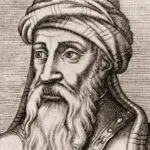
Islamic Golden Age
During Islam’s Golden Age, Muslim philosophers preserved Greek texts and made original contributions. Al-Kindi pioneered Islamic engagement with Greek philosophy....

Marxism & Social Critique
Karl Marx, with Friedrich Engels, developed historical materialism—the view that economic relations fundamentally shape society, politics, and consciousness. They analyzed...

Medieval Hindu Renaissance
Medieval India saw Hindu philosophy’s golden age. Shankara systematized Advaita (non-dual) Vedanta, arguing that only Brahman truly exists while the...

Medieval Scholasticism
Scholasticism emerged in medieval universities as a rigorous method of philosophical and theological inquiry. The rediscovery of Aristotle through Arabic...
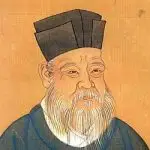
Neo-Confucian Revival
Neo-Confucianism emerged as a sophisticated revival addressing Buddhist metaphysical challenges while reasserting Confucian ethical and social values. Zhu Xi synthesized...

Phenomenology & Continental Philosophy
Continental philosophy encompasses diverse traditions unified by concern for lived experience, interpretation, and critique. Husserl founded phenomenology, seeking to describe...
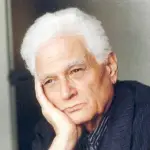
Postmodernism & Postcolonial Thought
Postmodernism emerged questioning Enlightenment assumptions about reason, progress, and universal truth. Lyotard diagnosed the postmodern condition as incredulity toward metanarratives....

Pragmatism
Pragmatism, America’s distinctive philosophical contribution, rejects abstract metaphysics for practical consequences and lived experience. Charles Sanders Peirce developed pragmatic maxim:...

Pre-Socratic
The Pre-Socratic philosophers initiated Western philosophy by asking fundamental questions about reality’s nature without appealing to mythology. In the Greek...

Renaissance Humanism
The Renaissance marked a cultural rebirth emphasizing human dignity, classical learning, and worldly engagement. Humanists like Petrarch, Erasmus, and Pico...

Scientific Revolution
The Scientific Revolution transformed European understanding of nature and knowledge. Copernicus challenged geocentrism, placing the sun at the center. Galileo...
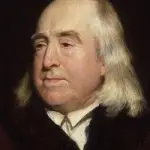
Utilitarianism & Social Reform
Utilitarianism emerged as a systematic ethical theory focused on consequences and human welfare. Jeremy Bentham articulated the principle of utility—actions...

Vedic & Upanishadic Thought
The Vedic tradition represents India’s earliest philosophical reflections, preserved in sacred texts composed over centuries. The Rigveda contains hymns questioning...